
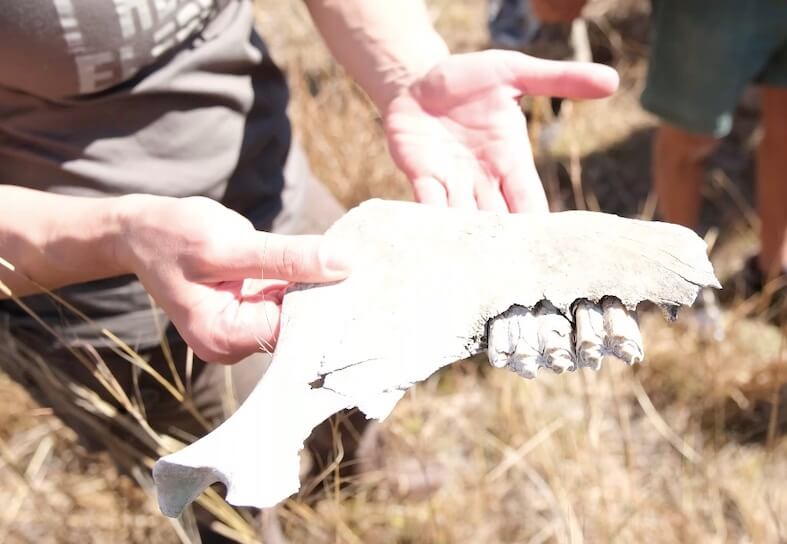
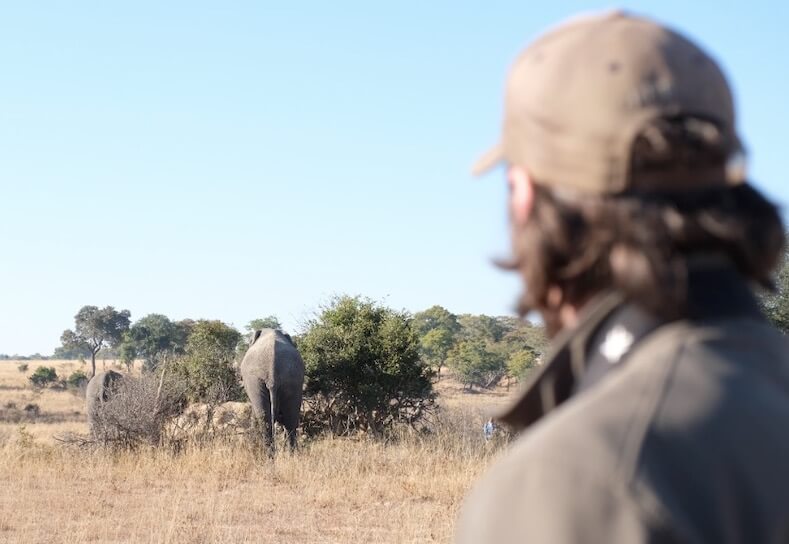
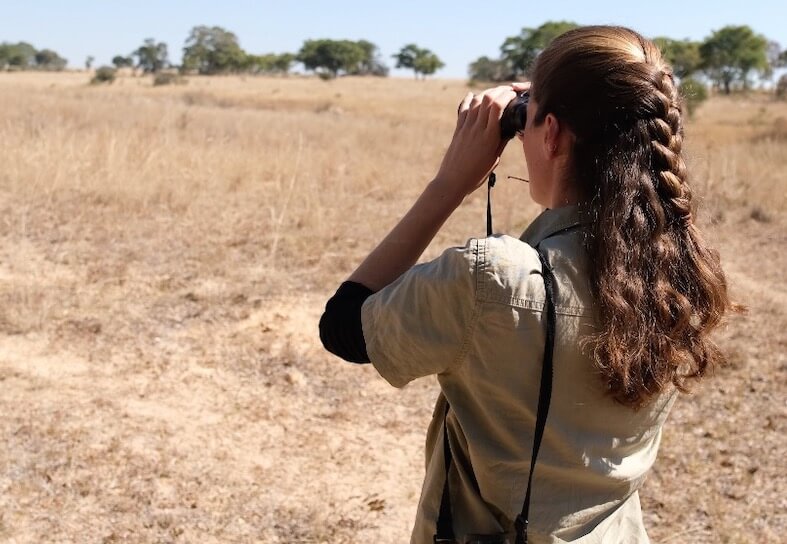
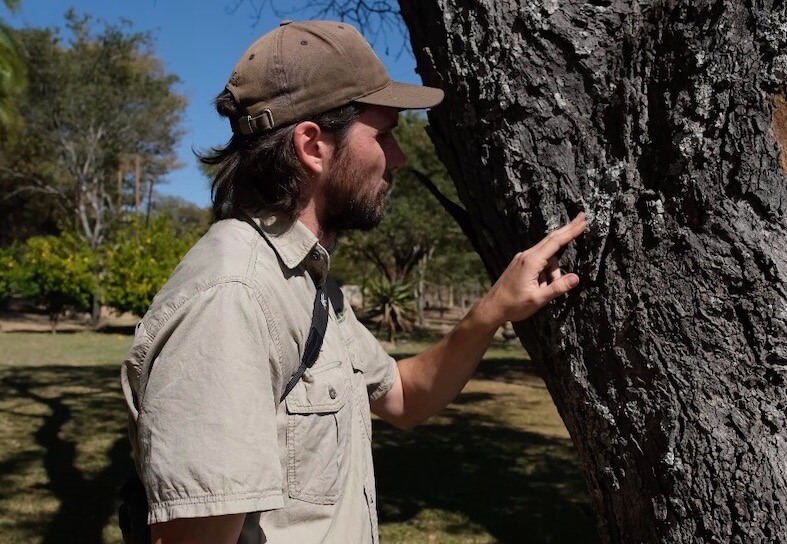
The 4-week Wildlife Conservation Course is an extension to the project’s popular and successful Rhino & Elephant Conservation Programme.
The in-depth, practical Wildlife Conservation Course is the perfect way to deepen your understanding and appreciation of the natural world, while enjoying the very best of what Zimbabwe has to offer. The broad range of wildlife topics covered, the experienced course leaders and the research techniques you will learn, are what set the this Wildlife Course apart from the rest.
Course content
Over the 28-day course, you will cover a huge range of topics and learn an immense amount about Zimbabwe’s different environments, ecology and habitats.
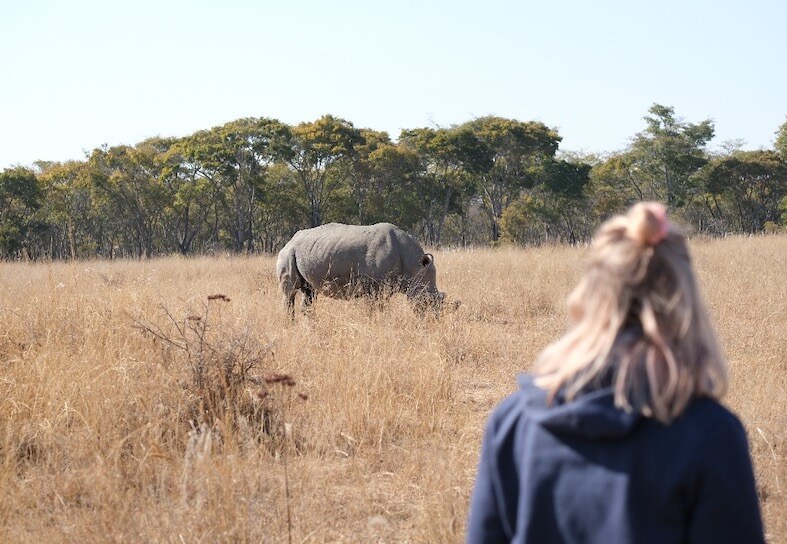
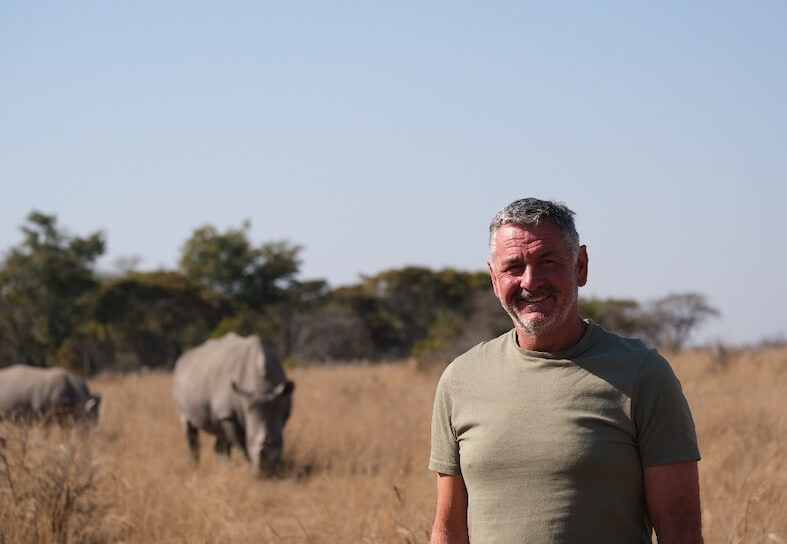
- Observe the behaviour of Africa’s most iconic species – including black and white rhinos, elephants, buffalo, giraffes and zebras – while learning directly from experienced conservationists on the ground.
- Step outside your comfort zone and discover what it truly takes to conserve and protect a wilderness area.
- Explore the major classifications of African Flora and Fauna and gain a foundation in the geological and ecological forces that shape Zimbabwe’s wildlife and wilderness.
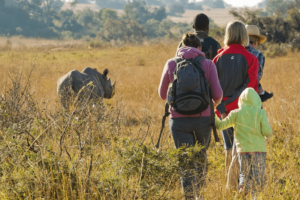
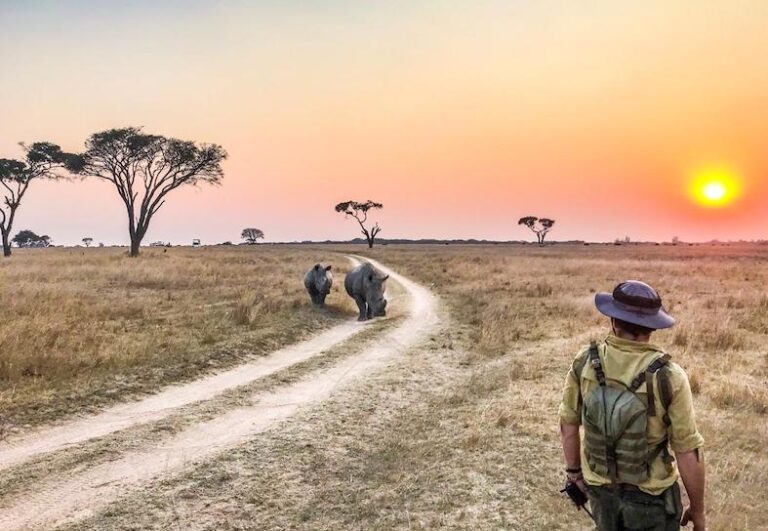
- Spend the majority of your time outdoors, exploring the conservancy on foot.
- Apply the skills and knowledge introduced in each topic and develop the practical techniques and hands-on experience essential for effective wildlife conservation.
You will learn to apply your skills in a range of environments, and will gain the theoretical skills that ensure you can apply what you have learnt across a variety of wildlife and conservation industries, anywhere in the world.
Wildlife Course – core practical elements:
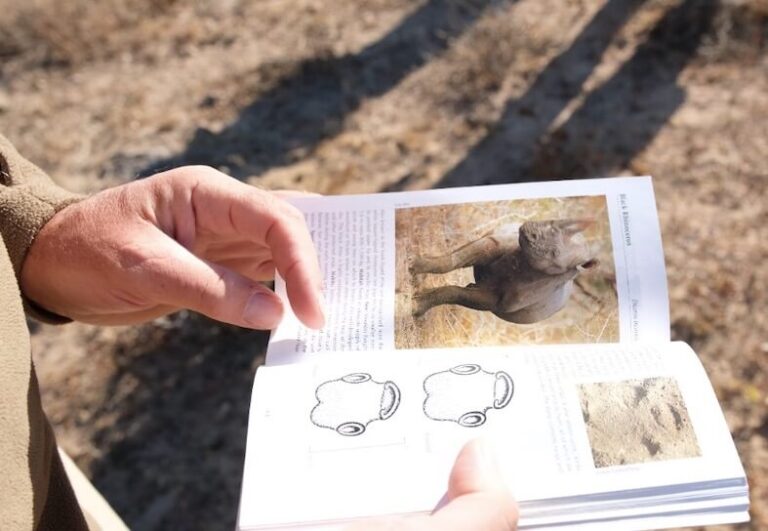
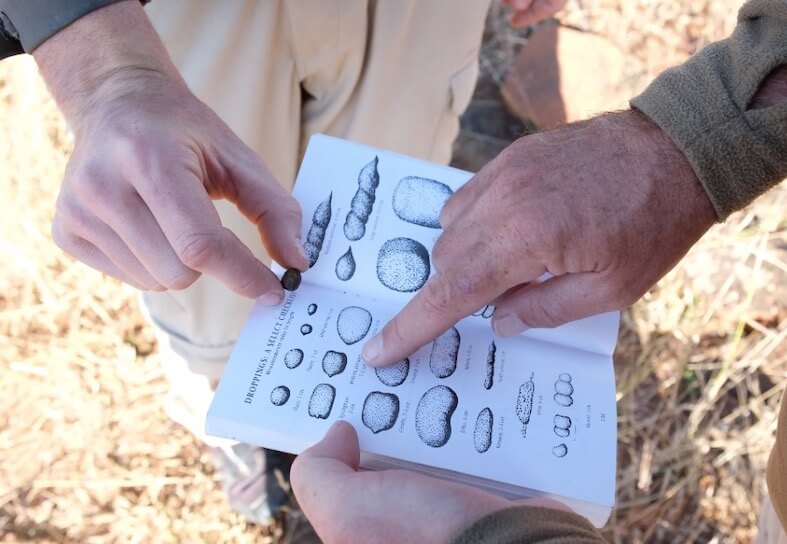
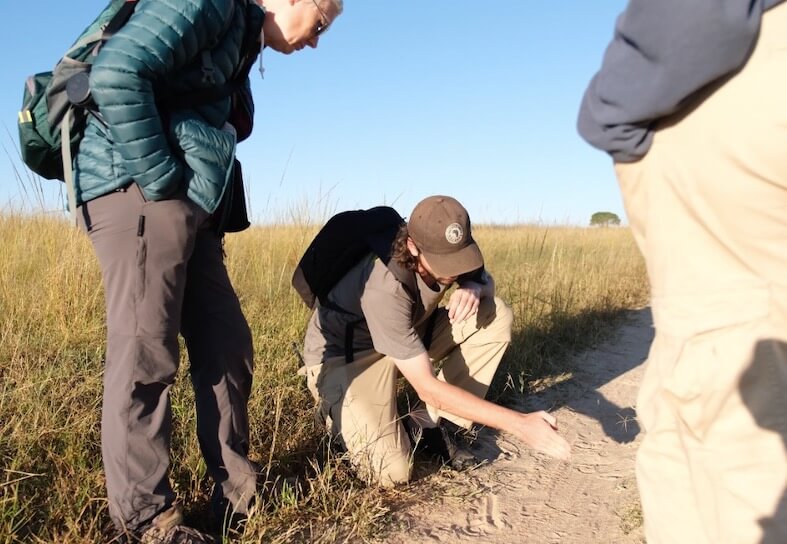
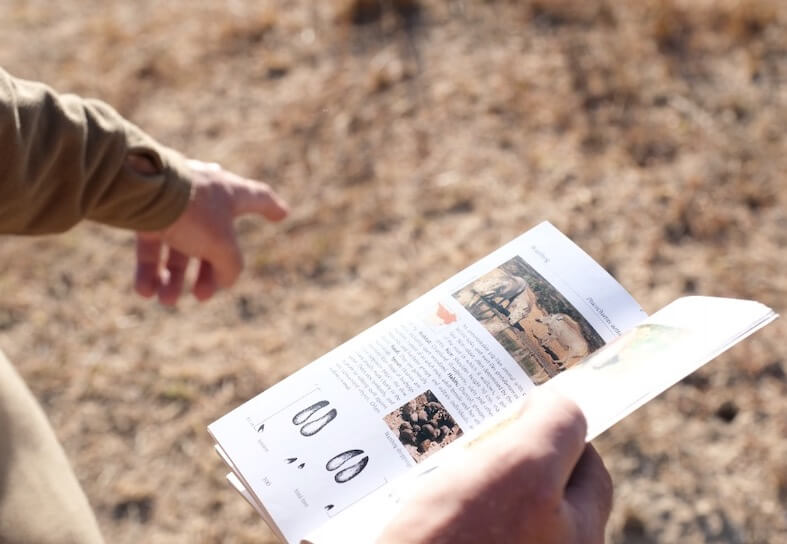
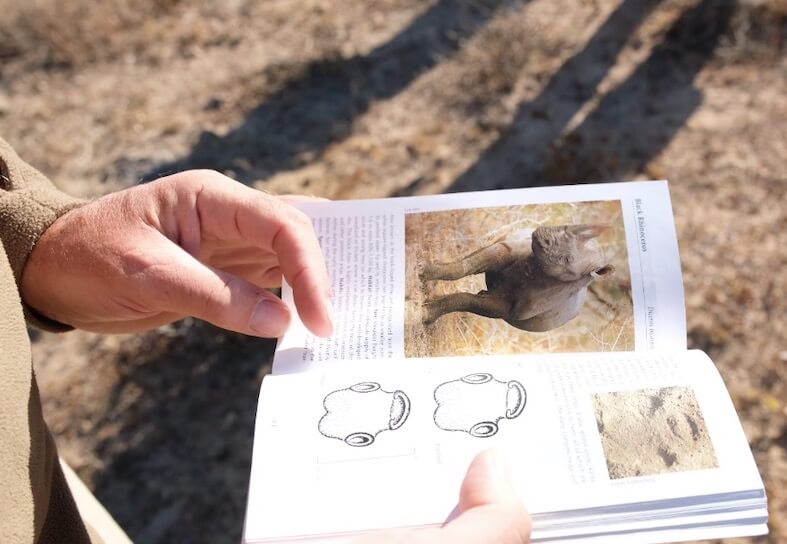
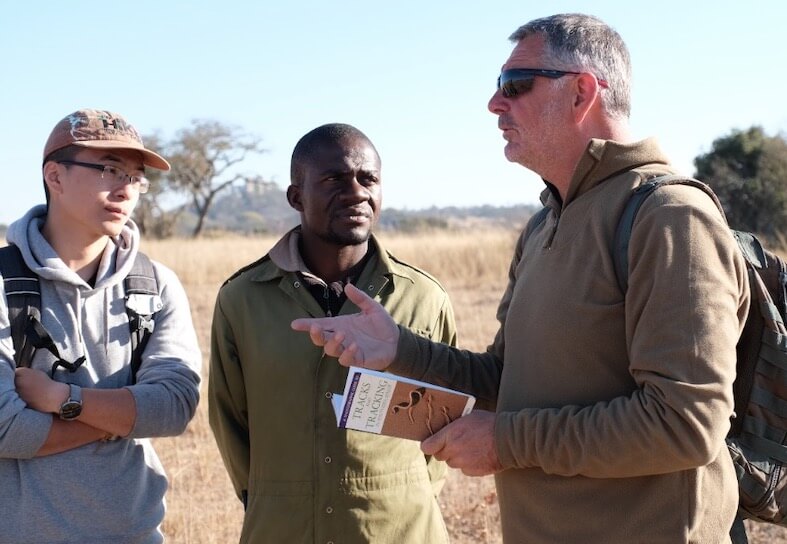
- Animal tracks and signs -learn the different ways to identify and track wildlife in the. bush. Put your skills and knowledge to the test in week 4’s tracking assessment!
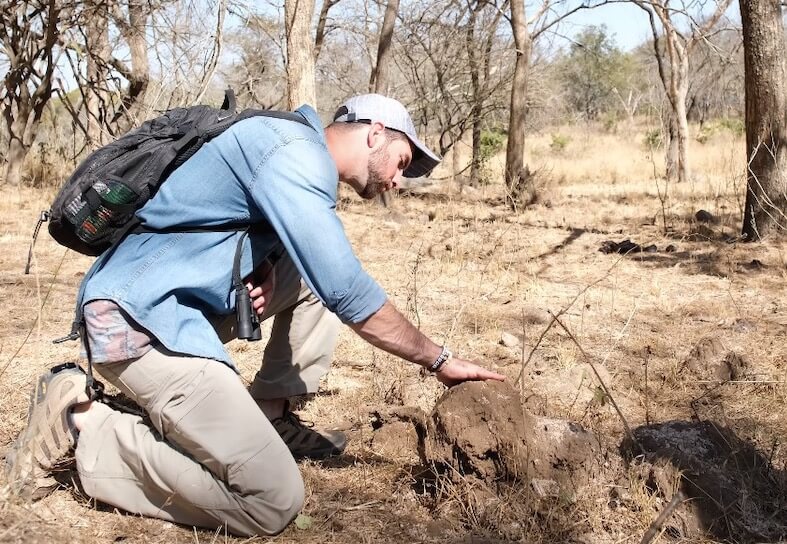
- Wildlife monitoring and surveys – learn to track black and white rhinos using telemetry. You will collect data on rhino dung middens, undertake bird surveys, study freshwater fish diversity and help with camera trap surveys and analysis.
- Complete nocturnal wildlife surveys, with a specific focus on bats.
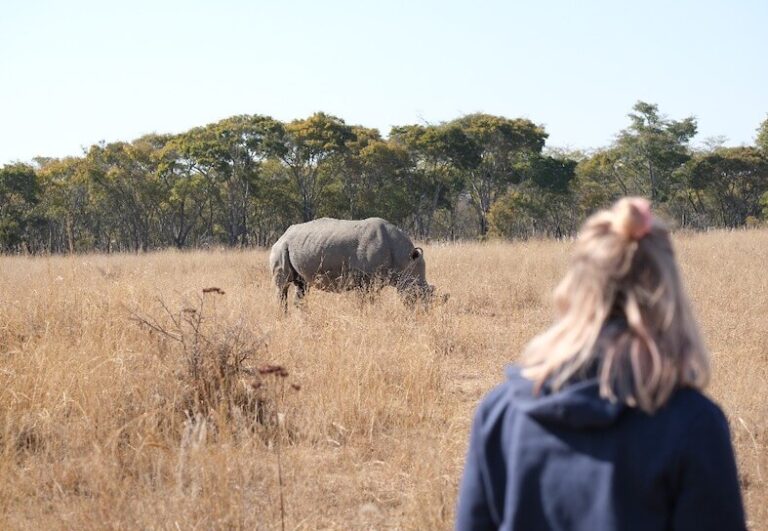
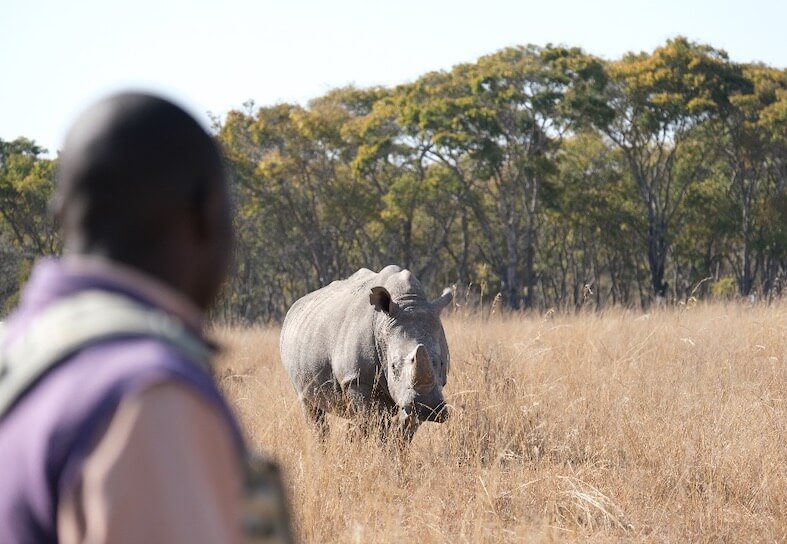
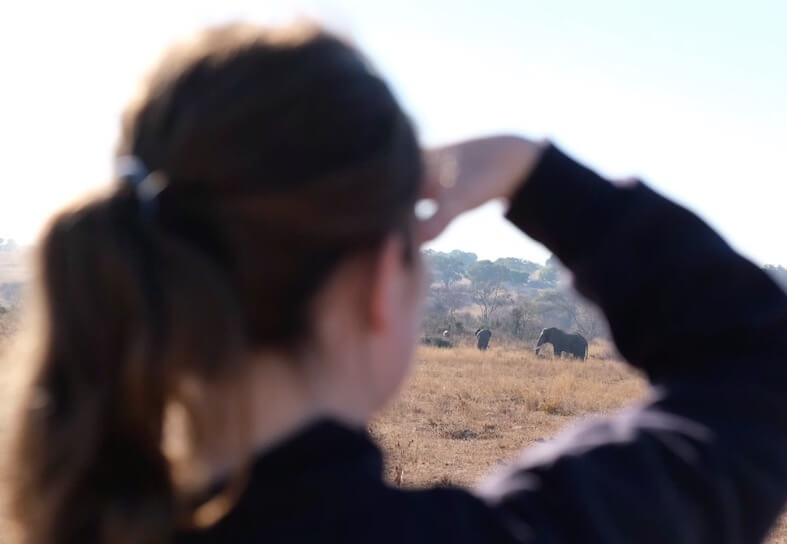
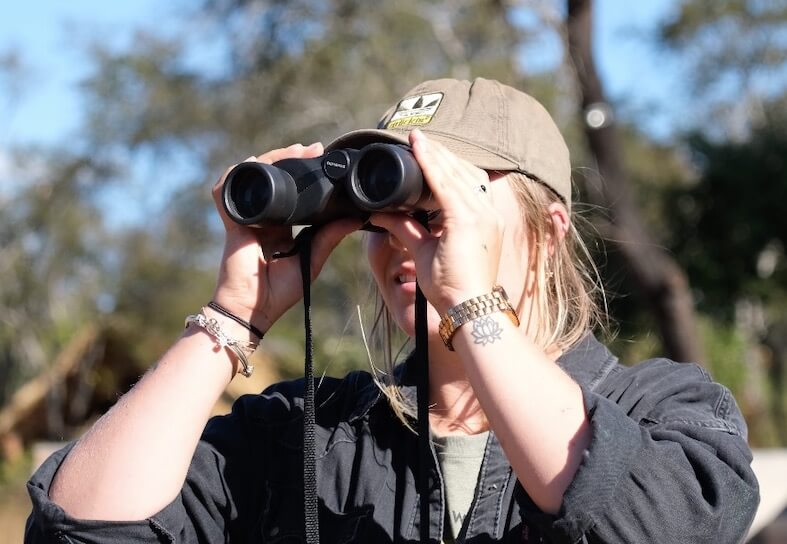
- Wildlife observations and animal identification – through guided game drives and bush walks, you will learn to identify animals by sight and sound (key focus on mammals and birds).
- Basic weapon handling and safety – understand how to safely use a firearm in wilderness areas, the importance of firearms in Anti-poaching Units and security, and undertake target practice.
- Bush survival skills and wild camp-out.
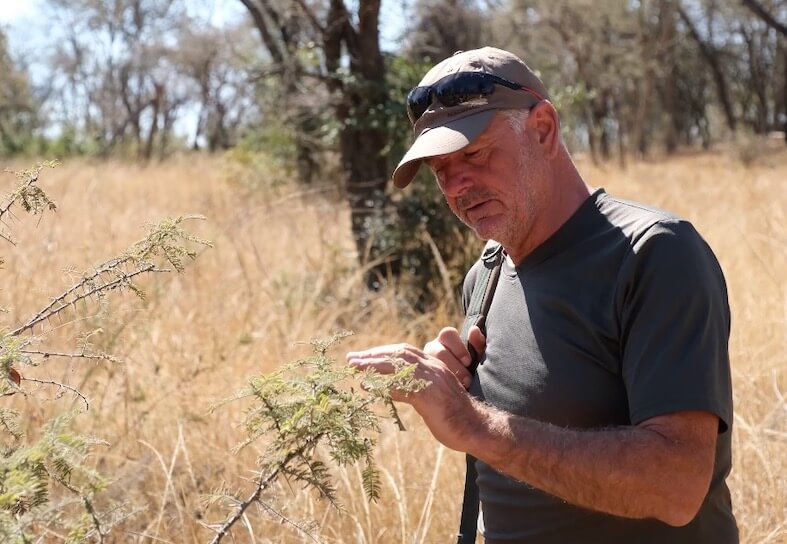
- Learn ancient skills – this includes the traditional/medicinal uses of common African plant species, fire-making, stargazing and orienteering at night.
- Wilderness First Aid – complete a 2-day practical training course with theoretical and scenario-based training components.
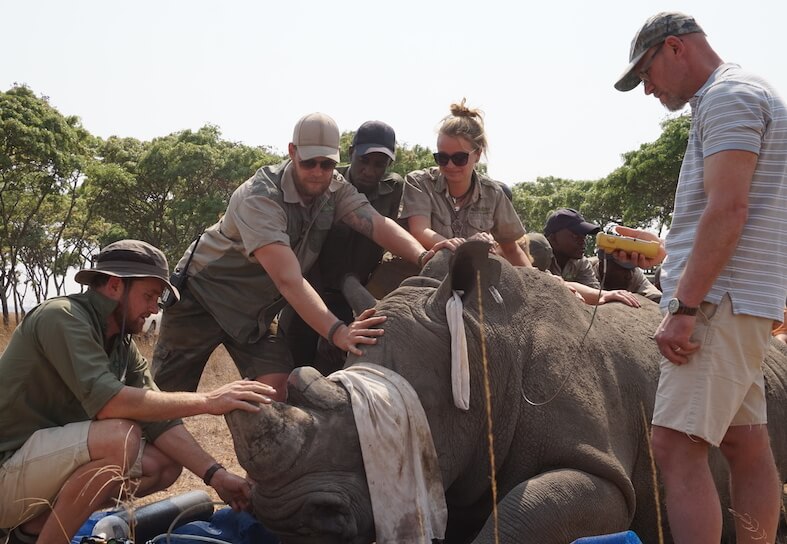
- Conservation and wildlife management workshops – these could include game capture, chemical immobilisation of wildlife for relocation, anti-poaching and security, conservancy maintenance tasks, and building projects. Activities may vary depending on the time of year and other factors.
Wildlife Course – theoretical components:
- Fauna topics: these will include sessions on Amphibians, Arthropods, Birds, Mammals and Reptiles.
- Animal behaviour.
- Ecology.
- Conservation management.
Community work
Successful wildlife conservation is connected to the well-being and involvement of local communities. The project’s outreach programs support a range of educational, medical and income-generating projects in local communities, which create long-term opportunities for men, women, and children in the area around the conservancy.
As part of the course, you will contribute to this holistic conservation approach by assisting with community-led programmes such as the women’s support group, the Numwa Secondary School conservation garden, and Happy Readers programme at local primary schools.
You will also have the opportunity to immerse yourself in Shona culture through a visit to a local village or organic farm, gaining a deeper understanding of the social and cultural landscapes of rural Zimbabwe.
Scientific Research
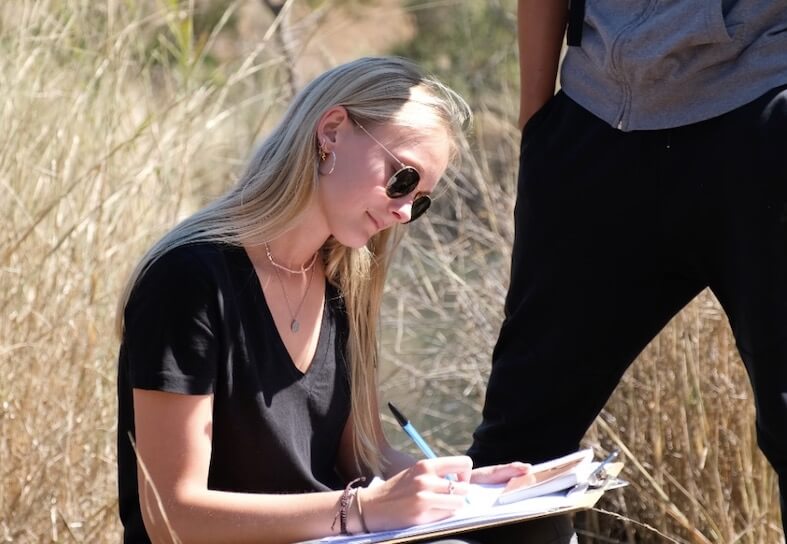
There is no other wildlife course which facilitates meaningful research quite like ours, where participants actively contribute to Imire’s scientific research projects.
Each topic of study includes a wildlife research project. For example – if you’re studying mammals you may go out into the reserve and track the rhinos using telemetry. Over time the data will then be mapped revealing ‘rhino hot spots’. This will allow better deployment of anti-poaching resources and better management of the vegetation on which the rhinos rely.
Another example – if you’re studying birds there is a bird ringing scheme. This involves catching birds using a mist net and applying a specially designed ring. Each ring is unique to that particular bird so if it’s caught or photographed again you can ID individuals. This allows the conservancy to better understand movements and migrations, monitor particular species, measure breeding success, understand population declines and ultimately conserve Zimbabwe’s bird species.
Whether you’re thinking about a career in conservation or simply want to learn more, being involved in research projects will give you invaluable experience.
The course schedule is designed to maximise your time in the field. Sessions will run from Monday to Saturday, with flexibility built in to suit each day’s focus. To make the most of our time outdoors, we often pack a picnic breakfast or lunch, allowing us to stay out longer without returning to the camp.
General breakdown of the day (Mon to Fri)
Day starts 06:10
Breakfast break 09:00
Lunch break 12:30
Day finishes 17:00
Dinner 18:30
Saturdays
Start at 06:10 and finish at 12:30 with the afternoon off
Sundays
Time off
Free Time
Evenings, Saturday afternoons and Sundays are your free time to unwind – whether you choose to relax at camp or take the Sunday shuttle to the volunteer house, where you’ll find kayaks and a massage therapist on site.
If you have extra time before or after your course, we highly recommend a visit to the majestic Victoria Falls. Direct flights operate from Harare’s Domestic Airport, and a long weekend is the perfect amount of time to experience the Falls and explore the surrounding area.
The Nature Enthusiast programme is small and welcoming, with no more than 8 students in a group.
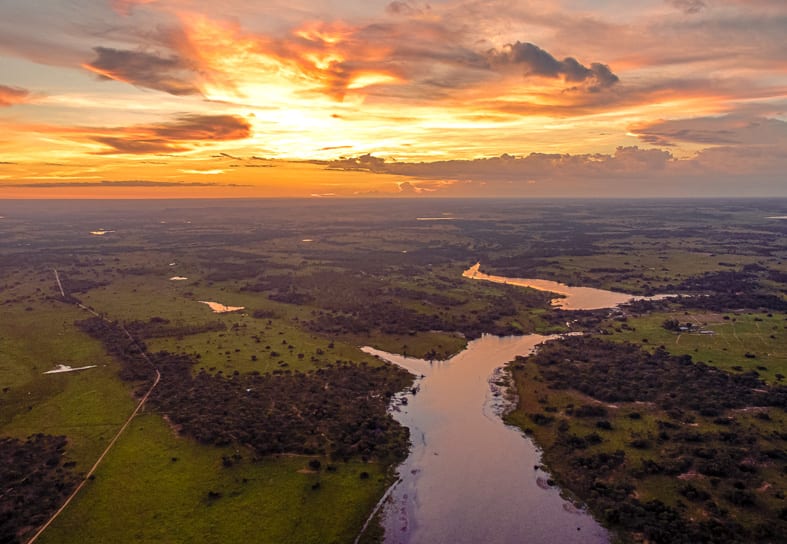
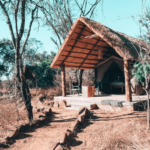
Your home away from home is the Wilderness Camp, a beautiful camp situated in the wild side of the reserve near a large dam, which allows an intensive learning in a diverse ecosystem. The camp is in an idyllic spot with large walk-in tents, a main bar, lounge, outside pool and braai area – all surrounded by pristine African bush.
You will sleep in a twin, en-suite safari-tent with the most beautiful landscape in the whole reserve. Bedrooms are shared (same sex sharing), with students sleeping in comfortable single beds. All bedding is provided, including duvets, pillows and extra blankets in winter. Couples will always be accommodated together in a private room. Showers and toilet facilities are en-suite in each tent, and hot water is supplied for showers and washing. Power sockets for electrical items are available in communal areas (UK three-pin square plugs).
Three home cooked meals are provided each day on a self-serve basis. Vegetarian and vegan options are available upon request.
- The project are able to cater for specific dietary needs (for example gluten, dairy or wheat intolerance), but you may be asked to bring any specialist foods with you.
- The chefs will be able to prepare these for you alongside other volunteer’s standard meals. Clean, safe drinking water is pumped from a borehole.
Your rooms and communal areas will be cleaned every day, and the housekeeping staff will also do your laundry when required. An outhouse laundry is available for washing smalls or should you wish to do an extra load of your own.
Bear in mind that electricity can be intermittent in Africa, especially during our rainy season. For backup, the project are prepared with basic solar powered lighting and a generator which will run for a short time in the morning and evening.
There is Wi-Fi at the project charged at $10 per device per week. When there is no electricity, the cellphone signal can be problematic, but it there is 4G signal available to touch base with home in certain areas of the conservancy.
There is access to a safe for securely locking away any cash or valuables you may have brought with you.


Course dates
November 2nd – 30th 2026
March 22nd – April 19th 2027
September 27th – October 25th 2027
Course pricing:
4-week course: $4,340
All prices are in USD.
What’s included in the cost?
- Accommodation and three meals per day, plus unlimited water, juice, tea and coffee
- Return airport transfers (on project start and end dates)
- Laundry and housekeeping
- All training costs, Nature Enthusiast workbook and course manual
- Transfers between course locations
- Practical instruction by experienced guides
- Equipment and materials required to do your work
- Full orientation upon arrival
What’s not included?
- Flights or travel to Harare, Zimbabwe
- Visa fees (variable depending on nationality)
- Travel insurance (compulsory)
- Administration fee ($40)
Optional extras
- Personal expenses such as souvenirs, drinks from the bar, snacks
- Pre and / or post programme accommodation (if required)
- Additional excursions
- WiFi / local SIM card and data / airtime bundles (optional)
View our booking terms and conditions.
The primary goal of Imire is to support Zimbabwe’s rhino heritage through the successful breeding and reintroduction of the endangered black rhino. Alongside this goal, is to ensure the long term protection of Zimbabwe’s wildlife through a unified and holistic approach to wildlife conservation. Their aim is to create a blueprint for small conservancies, enabling them to peacefully and successfully exist alongside local communities, ensuring that environmental stakeholders, including landowners, conservationists, communities and local farmers, all benefit from the presence of wildlife.
The Wildlife Conservation Course forms a critical part of Imire’s mission to give wildlife-lovers the opportunity to learn more about Africa’s wildlife, whilst contributing to a sustainable, long-term conservation strategy.
During your time on the Wildlife Conservation Course, alongside a deep understanding of animal behaviour, you will gain an appreciation of the dedication and commitment it takes to protect wildlife in Africa. Additionally, you will obtain an overall understanding of holistic conservation strategies and ethical conservation practices.
The course is perfect for:
- Nature lovers
- Volunteers
- Researchers
- Graduate and post-graduate natural science students
- Career break travel
- Mature travellers
- Gap year travel
Imire: Rhino & Wildlife Conservation is a 10,000 hectare privately owned rhino conservancy in the Mashonaland East district of Zimbabwe, approximately 130km east of Harare. The conservancy is dedicated to the welfare of all wildlife, with a particular focus on the protection and breeding of white rhino, and the critically endangered black rhino.
Imire was founded in 1948 by Norman and Gilly Travers. Originally farmers, the Travers’ had a passion for wildlife and conservation, leading to the establishment of Imire as a wildlife conservancy in 1972. During the 1970s, game was introduced back onto what was previously farmland. Then, like Noah’s Ark, the animals came in two by two and by 1980 the park was home to sizeable herds of plains game – waterbuck, impala, nyala, zebra and the rare sable antelope.
A history of rhino conservation
During the poaching crisis of the 1980s, most of Zimbabwe’s remaining black rhino population were relocated to the relative safety of Intensive Protection Zones within private conservancies. In 1987, Imire was granted custodianship of seven orphaned calves from the Zambezi Valley and became a dedicated black rhino breeding station. To date, 21 rhino have been born on the reserve, and Imire has released 13 black rhino back into National Parks in Zimbabwe.
With increasingly sophisticated wildlife poaching, rhino numbers have again dropped alarmingly. Until the current high levels of poaching abate in Zimbabwe’s National Parks, Imire has resolved to protect and secure its rhino onsite, rather than risking release into wilderness areas.
Imire’s current strategy is for their rhino, excepting a core breeding herd, to be released into a community-supported, second stage, free-roaming wilderness area within Imire’s boundaries. This allows the rhino to become less habituated, without daily interactions and supplement feeding. Armed guards remain with the rhino, but at a distance. In this way Imire can ensure their rhinos are safe from birth, until such a time when they are able to confidently release rhino back into their wild habitats, in Zimbabwe’s National Parks.
Other wildlife
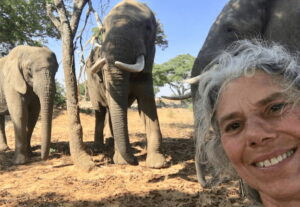
Imire is world-world-famous for its 12 black and 16 white rhino. In addition, the conservancy is home to three elephants and a herd of Cape buffalo. There is a variety of plains game including eland, kudu, nyala, waterbuck, blesbok, zebra, giraffe, wildebeest and crocodile, plus herds of the rare sable antelope – Zimbabwe’s National Animal. Imire is also home to a wide variety of birds, reptiles and snakes.
Who should join the Wildlife Conservation Course?
No previous experience or education is required, but a passion for nature is essential. The course is a wonderful learning experience for participants of all ages and backgrounds who would like a more in-depth experience and understanding of Africa’s iconic and endangered wildlife.
There is some walking and foot-based tracking on the project, plus climbing in and out of a high-sided vehicle, so volunteers should be of reasonable mobility. You will need to have a good grasp of spoken and written English.
How old do I need to be?
The minimum age is 18 years. There is no upper age limit and the course is extremely popular with volunteers of all ages.
How many people will there be?
There is a maximum of 8 participants at one time, plus staff.
When can I join?
You should arrive and depart on the Monday start and end dates of the course. The inclusive transfer service is as follows:
Arrivals – Mondays
There is one collection from Harare International Airport at 1330 on the Monday afternoon. Should your preferred flight arrive later than this, you can either arrive into Harare on the Sunday and arrange overnight accommodation in town, or you can arrive on the Monday and pay a transfer supplement of $120. If you choose to arrive on Sunday, you should make your way to the airport at an agreed time on Monday.
Note that flights arriving into Harare after 1500 on Monday are too late for a same-day transfer.
Departures – Mondays
There is one transfer from Imire which arrives at Harare International Airport at 1000 on Monday morning. Onward flights should depart later than midday to allow ample time to check in.
What will the weather be like?
April – October is the dry season, with the rains usually coming in mid to late November. June – September is winter, characterised by warm, sunny days, clear blue skies and cool evenings and nights. October is the hottest month, with temperatures in the area reaching 30-32 degrees. November – March is summer, where rain showers are intermingled with hot, sunny days and temperatures of over 30 degrees.
How long is the course?
The course is 28 days (4 weeks) long. You are welcome to stay longer at the project and join either the Rhino & Elephant Conservation Programme or the Horse Riding & Rhino Conservation Programme.
What reference books should I read or bring?
You will be issued with a course manual and workbook, but we also recommend the following reference books (or the apps associated with the book):
- Roberts Birds of Southern Africa – Gibbon and Voelker
- Mammals of Southern Africa – Smithers
- Field Guide to Trees of Southern Africa – Van Wyk and Van Wyk
- A Photographic Guide of Tracks and Tracking in Southern Africa – Liebenberg
How much spending money should I bring?
We recommend bringing around $150 per week in USD to cover personal expenses such as drinks, souvenirs, t-shirt, snacks, tips and internet usage.
Do I need a visa?
Most nationalities, including British, American, Canadian, Australian and most EU citizens, can get a 30-day tourist Evisa prior to arriving in Zimbabwe. Fees are dependent on nationality and range from $30 – $75 (paid in USD cash). Extensions are available from the Department of Immigration in Harare, up to a maximum stay of 6 months.
It is your responsibility to check your visa eligibility prior to arrival.
What animals will I encounter?
Imire is world-world-famous for its 12 black and 16 white rhino. In addition, the conservancy is home to three elephants and a herd of Cape buffalo. There is a variety of plains game including eland, kudu, nyala, waterbuck, blesbok, zebra, giraffe, wildebeest and crocodile, plus herds of the rare sable antelope – Zimbabwe’s National Animal. Imire is also home to a wide variety of birds, reptiles and snakes.
What vaccinations do I need?
Please consult your GP or travel clinic for detailed medical advice. All volunteers should make sure their Tetanus vaccination is up to date.
Malaria – the project is regarded as a low-risk malaria area, but please consult your GP for guidance.
Please visit this UK government website for more details.